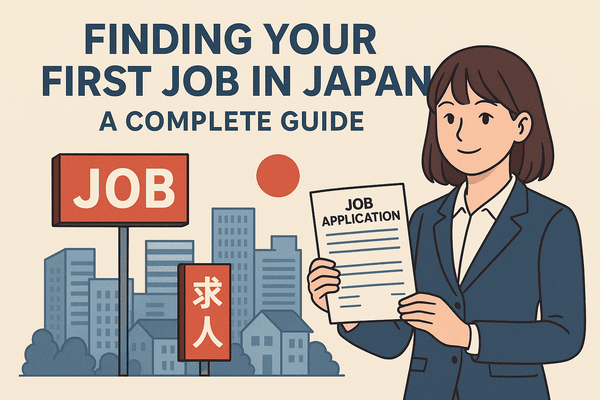
Finding Your First Job in Japan: A Complete Guide
Whether you want to work in Tokyo, Osaka, or a regional city — this guide walks you through the whole process: what to prepare, where to look, how to write a Japanese-style resume (rirekisho), interview tips, visa basics, and cultural expectations.
Quick checklist
- ✅ Update LinkedIn & CV
- ✅ Prepare a Japanese-style resume (rirekisho)
- ✅ List target companies & job boards
- ✅ Practice interview questions in Japanese/English
- ✅ Check visa eligibility
1. Before you start
Set clear goals. Do you want a full-time position, an internship, or a bridge to permanent employment? Decide on your preferred cities, industries, and whether you need English-only roles or can use Japanese. Your answers will shape which job boards, recruiters, and companies you target.
Skills & documentation
- English CV / Japanese resume (rirekisho) — see the template section below.
- Portfolio or GitHub (for developers, designers, product roles).
- Certificates (JLPT, degree, professional licenses).
- Valid passport; check visa requirements early.
2. Job search channels
Online job boards
Use a mix of international and Japan-specific job sites. Popular categories: IT, engineering, teaching (eikaiwa/ALT), finance, and startups.
- Company career pages — best for direct applications
- Recruiter/agency listings — useful for sponsorship and mid-career roles
- Specialized boards — tech, design, bilingual roles
Networking & events
Meetups, alumni groups, and professional networks are powerful in Japan. Building relationships can open opportunities not listed publicly.
Recruiters
Recruiters are common for bilingual hires, managerial roles, and specialized positions. Keep conversations open — they can guide salary ranges and visa sponsorship likelihood.
3. Resume — CV vs Rirekisho
International CVs (English) are usually skills-focused. A Japanese rirekisho is standardized and more formal — often used alongside a skills-based 職務経歴書 shokumu keirekisho (work history document).
Tips for both
- Keep the top of your English CV concise: one page if you're early career, two pages max.
- For Japanese roles: include a polite, concise personal statement in Japanese if possible.
- Show impact with numbers: "Reduced onboarding time by 30%".
Rirekisho template (simple)
氏名: (Name)
生年月日: YYYY年MM月DD日
住所: (Current address)
電話: +81-90-XXXX-XXXX / email@example.com
学歴: YYYY年 — 学校名・専攻
職歴: YYYY年 — 会社名・役職・簡単な説明
保有資格: JLPT N2, etc.
志望動機: (1–3 sentences in Japanese / English)
You can find printable PDF templates by searching for "rirekisho template" — many Japanese companies expect this format for formal hiring processes.
4. Applications & outreach
Tailor each application. For Japanese companies, include a brief, polite message in Japanese if you can. In English-speaking startups, show product sense and ownership. Always attach: CV, cover letter (or short message), and portfolio if relevant.
Cold emailing & contacting recruiters
Keep messages short, value-focused, and respectful of time. Provide a 1–2 line summary of your background and what you want.
5. Interview preparation
Typical process: phone/Zoom screening → 1–3 interviews (technical, team, manager) → offer. Expect both competency questions and behaviour-based questions.
Common interview topics
- Why Japan / why this company?
- Strengths & weaknesses — be honest and show steps you take to improve.
- Problem-solving examples — use STAR method (Situation, Task, Action, Result).
- Technical or case tests for some roles.
Japanese interview etiquette
- Be punctual — arrive a few minutes early for in-person interviews.
- Dress conservatively for formal companies (suit & tie for men; formal business attire for women).
- Polite bowing and a clear greeting are appreciated.
6. Visa basics
Many companies sponsor work visas (e.g., Engineer/Specialist in Humanities/International Services). Small startups may prefer candidates who already have a working visa. Discuss sponsorship with recruiters early.
What to ask your prospective employer
- Will you sponsor a working visa?
- What type of visa and expected timeframe?
- Will the company help with relocation or initial housing?
7. Language & cultural tips
Japanese language ability helps in daily work, team communication, and shows commitment. Even basic greetings, email etiquette, and humble expressions go a long way.
Work culture notes
- Hierarchy and harmony (和 — wa) are valued; be careful with direct confrontation.
- Consensus-driven decisions are common; meetings may involve listening more than speaking initially.
- Overtime practices vary — ask about expected hours and flexibility.
8. Salary, benefits & negotiation
Salaries in Japan vary by industry, experience, and location. Use recruiters and salary data to benchmark. Negotiation is normal but usually more modest than in some other countries.
- Ask about base salary, bonus structure, paid leave, commuting allowance, and social insurance.
- For startups: equity or stock options might be part of the package.
9. Remote, contract, and part-time options
Remote roles are growing, especially in tech. Contract work or internships can be a pathway to full-time roles — they let employers trial fit and let you build local experience.
10. FAQs
- Can I find a job with no Japanese?
- Yes — English-friendly roles exist in startups, teaching, and multinational companies. However, Japanese will widen your options and improve daily life.
- How long does visa sponsorship take?
- It varies — often several weeks to a few months depending on documentation and the type of visa.
- Do Japanese companies hire remote workers abroad?
- Some do, but many expect employees to be in Japan or willing to relocate for full-time positions that require close team collaboration.
11. Resources & next steps
Start with these actions:
- Polish your English CV and write a simple Japanese rirekisho.
- Create a list of 20 companies or roles to contact.
- Register on 3–5 job boards and connect with 1–2 recruiters.
- Prepare 5 concise stories using the STAR format for interviews.
Good luck — job hunting can be a marathon, not a sprint. Stay consistent, seek feedback, and use each interview as practice.