Jobs Myanmar Nationals Can Do in Japan by Visa Type | 2026 Employment Guide
Aung Khant· Career Advisor
|·14 min read
Read in
Jobs Myanmar Nationals Can Do in Japan by Visa Type | 2026 Employment Guide
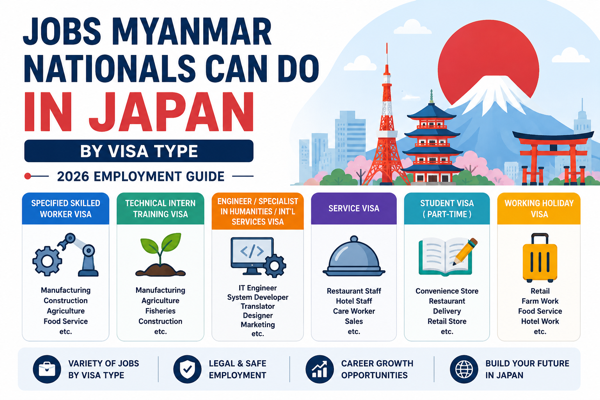
For Myanmar nationals working in Japan, it is important to understand what types of jobs they are legally allowed to do under their current visa or Residence Status.
Japan offers a wide range of employment opportunities, but the jobs you can legally do depend on your 在留資格 (Residence Status), the type of work, and any additional work permissions you may have.
For 2026, this guide brings together the major Residence Status categories commonly held by Myanmar nationals in Japan and explains the types of jobs they may be able to do.
Important: Having a particular visa or Residence Status does not automatically mean you can work in any job. Always check your Residence Card, permitted activities, and any required work authorization before starting a new job.
1. TokuteiGinou (特定技能) – Specified Skilled Worker
Tokutei Ginou (Specified Skilled Worker) is a Residence Status designed for foreign workers who have the required skills and language ability to work in designated industries where Japan has a labor shortage.
As of 2026, the Specified Skilled Worker system covers 16 fields.
Main Jobs Available Under Tokutei Ginou
👵 Nursing Care – Elderly care and nursing care services
🧹 Building Cleaning – Building and facility cleaning
🏭 Industrial Product Manufacturing – Manufacturing of industrial products
🏗️ Construction – Construction-related work
🚢 Shipbuilding & Ship Machinery – Shipbuilding and marine equipment
✈️ Aviation – Aviation-related ground and airport services
🏨 Accommodation – Hotel and accommodation services
🚛 Automobile Transportation – Road transportation and related work
🚆 Railway – Railway-related operations
🌾 Agriculture – Crop farming and agricultural work
🐟 Fishery & Aquaculture – Fishing and aquaculture
🍱 Food & Beverage Manufacturing – Food and beverage manufacturing
🍜 Food Service – Restaurant and food-service operations
🌲 Forestry – Forestry-related work
🪵 Wood Industry – Wood and timber-related industries
The specific duties and requirements vary by field.
For example, work in the Food Service field may include food preparation, customer service, and store management, depending on the position.
What Are the Requirements for Tokutei Ginou?
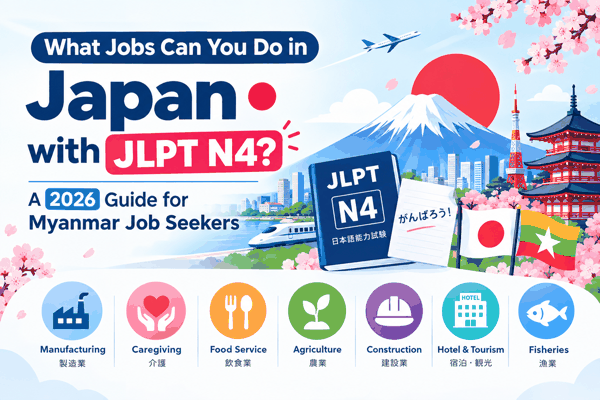
In general, applicants need to meet the skill test and Japanese-language requirements for their specific field.
Requirements can vary depending on the field, so it should not be assumed that “passing N4 is enough for every Tokutei Ginou job.”
For some fields, applicants may need JFT-Basic or JLPT N4 or above, while the Nursing Care field may also require additional Japanese-language assessments.
Always check the latest requirements for the specific field before applying.
2. 技術・人文知識・国際業務 (Gijinkoku) Visa
The Engineer / Specialist in Humanities / International Services Residence Status, commonly referred to as “Gijinkoku Visa” among Myanmar nationals, is intended for professional work that requires relevant knowledge, education, skills, or experience.
💻 IT / Engineering
Software Engineer
System Engineer
Programmer
IT-related Specialist
Engineering-related positions
🌏 International Services
Translator / Interpreter
International Relations
Overseas Business
International Trade-related Work
Foreign-language Customer Support
🏢 Humanities / Business-related Work
Accounting
Marketing
Business Planning
Office Administration
Management-related Work
However, having a university degree alone does not automatically allow you to work in every type of job under Gijinkoku.
The actual duties of the position must generally be compatible with your educational background, professional experience, and the requirements of the Residence Status.
3. 技能実習 (Technical Intern Training)
The Technical Intern Training Program has historically been used by many Myanmar nationals to work in Japan while developing practical skills and knowledge through on-the-job training.
Common Types of Work
🏭 Factory / Manufacturing
👕 Garment / Textile
🌾 Agriculture
🏗️ Construction
🍱 Food Manufacturing
🐄 Agriculture / Livestock-related Work
However, Japan is moving toward replacing the Technical Intern Training Program with the Employment for Skill Development (育成就労) system.
Therefore, the current Technical Intern Training system and the future Employment for Skill Development system should not be treated as the same system.
If you are currently working under Technical Intern Training, check the rules and transition arrangements applicable to your individual situation.
4. Part-time Jobs for Student Visa (留学) Holders
Myanmar nationals studying at a Japanese language school, vocational school, or university may be able to work part-time after obtaining 資格外活動許可 (Permission to Engage in Activity Other Than That Permitted under the Status of Residence).
The work must be performed within the conditions and working-hour limits permitted by immigration regulations.
🛒 Convenience Store / Supermarket
Stocking products
Cashier work
Receiving goods
Cleaning
🍜 Restaurant
Kitchen assistance
Dishwashing
Customer service
Food preparation
📦 Factory / Warehouse
Packing
Sorting
Product checking
Preparing goods for shipment
🧹 Cleaning
Hotel cleaning
Office cleaning
Building cleaning
🚚 Delivery-related Work
Delivery work, depending on the type of work and applicable conditions
Student Visa Working-Hour Limits
During normal school periods, students with the appropriate permission can generally work up to 28 hours per week.
During designated long school vacations, they may generally be permitted to work up to 8 hours per day and 40 hours per week, provided the applicable requirements are met.
❌ Jobs That Are Prohibited
Even with permission to work part-time, Student Visa holders are not permitted to work in prohibited businesses covered by 風俗営業 (Fuzoku-related businesses) and other restricted activities.
Therefore, having permission to work part-time does not mean that every type of job is permitted.
5. Working Under TokuteiKatsudo (特定活動) – Designated Activities
Tokutei Katsudo / Designated Activities is not a single category that automatically gives everyone the same employment rights.
The Designated Activities Residence Status can cover various purposes, and the activities permitted depend on the specific type of Designated Activities status granted to the individual.
This is particularly important for people who have changed from a Student Visa to Designated Activities while searching for employment, or who have changed their status from Technical Intern Training.
For example, certain graduates of Japanese universities may be eligible for a Designated Activities status that allows them to continue their job search after graduation.
If You Are Working Under Tokutei Katsudo
Always check:
What activity is permitted on your Residence Card
Whether employment is permitted
Whether you have 資格外活動許可
Whether there are working-hour restrictions
Whether the job matches the activity permitted under your status
Do not assume that Tokutei Katsudo automatically allows you to work full-time or in any type of job.
6. Part-time Work Under Dependent Visa (家族滞在)
People living in Japan under Dependent Status (家族滞在) do not automatically have unrestricted permission to work.
If you want to work part-time, you may need to obtain the appropriate 資格外活動許可 and follow the permitted working hours and conditions.
Therefore, always check your Residence Card and work authorization before starting employment.
Certain Residence Statuses, including Permanent Resident (永住者) and some Spouse-related statuses, have fewer restrictions on the type of employment that can be performed.
For example, Permanent Residents and Long-Term Residents generally do not have the same employment restrictions tied to a specific occupation or industry.
Therefore, they may be able to look for jobs in areas such as:
Factory
Restaurant
Hotel
Office
Cleaning
Retail
However, job requirements, qualifications, and employment conditions still need to be considered when choosing a position.
Which Jobs Should You Look for Based on Your Visa?
When looking for a job in Japan, don't start with “How much can I earn?”
The first question should be:
“Am I legally allowed to do this job under my current Residence Status?”
Visa / Residence Status
Examples of Jobs
Most Important Thing to Check
Tokutei Ginou
Caregiving, Factory, Construction, Food Service, etc.
Relevant Specified Skilled Worker field
Gijinkoku
IT, Engineering, Translation, Office, International Services
Compatibility between the job and your qualifications
Technical Intern
Manufacturing, Agriculture, Construction, etc
Designated training/job requirements
Student
Convenience Store, Restaurant, Factory, Cleaning, etc.
資格外活動許可 + working-hour limits
Tokutei Katsudo
Depends on the designated activity
Permitted activity and work authorization
Dependent
Permitted part-time work
資格外活動許可
Permanent Resident
Wide range of occupations
Employment conditions and contract
Find Jobs That Match Your Visa on iorUp
For Myanmar nationals looking for jobs in Japan, iorUp Platform provides access to Part-time, Full-time, and Tokutei Ginou job opportunities.
When you find a job, don’t look at the salary alone. Check each of the following:
Visa → Job Type → Salary → Working Hours → Location → Job Requirements
iorUp allows users to search job information in Myanmar, Japanese, and English, making it easier to understand and compare job opportunities.
You can also save your CV and use it when applying for jobs.
In addition, iorUp provides a Chat System that allows applicants and employers to communicate directly, making it easier to ask questions and obtain more information about a job opportunity before proceeding with the application.
5 Things to Check Before Applying for a Job
Before applying for a job in Japan, check these five things:
What is my current Visa / Residence Status?
Am I legally allowed to do this job under my Residence Status?
Do I need 資格外活動許可?
Are there any working-hour restrictions?
Are the salary, overtime conditions, and employment contract clearly stated?
Checking these points before starting work can help you avoid problems related to your Residence Status and employment conditions.
Conclusion
There are many employment opportunities available to Myanmar nationals in Japan, but the jobs you can legally do depend on your Visa / Residence Status.
If you hold Tokutei Ginou, you generally need to work within the relevant specified field. If you hold Gijinkoku, the job should meet the requirements related to your education, professional background, and the permitted scope of work.
For Student and Dependent statuses, you need to follow the applicable work-permission and working-hour restrictions.
Tokutei Katsudo requires particular attention because employment rights can differ depending on the specific Designated Activities granted to you.
Therefore, if you are looking for a new job in Japan:
Check your Visa → Find a compatible job → Read the job posting carefully → Confirm required permissions → Apply
You can search for employment opportunities across Japan on iorUp and find jobs that match your Visa, skills, and career goals.
Frequently Asked Questions (FAQ)
Can I work part-time with a Student Visa?
Yes, but you generally need the appropriate 資格外活動許可 and must follow the permitted working hours and types of employment. During normal school periods, the limit is generally 28 hours per week.
Can I work more hours during school vacations with a Student Visa?
During designated school vacation periods, students who meet the applicable requirements may generally work up to 8 hours per day and 40 hours per week.
What jobs can I do with TokuteiGinou?
As of 2026, Tokutei Ginou covers 16 specified fields, including Nursing Care, Building Cleaning, Manufacturing, Construction, Accommodation, Agriculture, Food Manufacturing, and Food Service.
Can I do any job with TokuteiKatsudo?
No. Employment under Tokutei Katsudo (Designated Activities) depends on the specific type of activity permitted for your Residence Status. You should check your Residence Card and any relevant work authorization before starting a job.
What can happen if I work in a job that does not match my Visa?
Working without the required authorization in an activity outside the scope permitted by your Residence Status may violate Japanese immigration regulations. Therefore, always confirm your legal work eligibility before starting the job.
လုပ်ငန်းနယ်ပယ်အလိုက် လိုအပ်ချက်နဲ့ လုပ်ငန်းတာဝန်တွေ မတူနိုင်ပါတယ်။ ဥပမာ Food Service မှာ အစားအသောက်ပြင်ဆင်ခြင်း၊ Customer Service နဲ့ Store Management စတာတွေ ပါဝင်နိုင်ပါတယ်။
TokuteiGinouအတွက် ဘာတွေလိုအပ်လဲ?
ယေဘုယျအားဖြင့် သက်ဆိုင်ရာလုပ်ငန်းနယ်ပယ်အလိုက် Skill Test နဲ့ Japanese Language Requirement တွေရှိပါတယ်။ Field အလိုက် လိုအပ်ချက်တွေ ကွာနိုင်တာကြောင့် “အားလုံး N4 ရရင် ပြီးပြီ” လို့ မယူဆသင့်ပါဘူး။ ဥပမာ အချို့ field တွေမှာ JFT-Basic သို့မဟုတ် JLPT N4 နှင့်အထက် လိုအပ်ပြီး Nursing Care မှာ သီးခြား Japanese Language Evaluation Test လည်း လိုအပ်နိုင်ပါတယ်။
2. 技術・人文知識・国際業務 (Gijinkoku) Visa
မြန်မာတွေကြားမှာ “Gijinkoku Visa” လို့ ခေါ်လေ့ရှိတဲ့ Engineer / Specialist in Humanities / International Services Residence Status က ကျွမ်းကျင်မှု၊ ပညာရေးနဲ့ လုပ်ငန်းတာဝန်ဆိုင်ရာ အရည်အချင်းတွေကို အခြေခံပြီး သက်ဆိုင်ရာအလုပ်တွေ လုပ်ကိုင်ဖို့အတွက် ဖြစ်ပါတယ်။
သို့သော် 2026 ခုနှစ်မှာ ဂျပန်နိုင်ငံက Technical Intern Training System ကို အစားထိုးမယ့် Employment for Skill Development (育成就労) စနစ်အတွက် ပြင်ဆင်မှုတွေ ဆက်လက်လုပ်ဆောင်နေပါတယ်။ ဒါကြောင့် လက်ရှိ Technical Intern နဲ့ အနာဂတ်စနစ်ကို တစ်ခုတည်းအဖြစ် မရောထွေးသင့်ပါဘူး။
4. Student Visa (留学) နဲ့ လုပ်လို့ရတဲ့ Part-time အလုပ်များ
ဂျပန်မှာ Japanese Language School၊ Vocational School သို့မဟုတ် University တက်နေတဲ့ မြန်မာကျောင်းသားတွေဟာ 資格外活動許可 (Permission to Engage in Activity Other Than That Permitted) ကို ရယူထားမှသာ သတ်မှတ်ထားတဲ့ အချိန်အတွင်း Part-time အလုပ်လုပ်နိုင်ပါတယ်။